

2026 Cost Ranges, Key Price Factors, and Model Selection Tips
Vacuum packaging machine prices can range from about US$300 to more than US$20,000, depending on chamber size, vacuum pump configuration, body structure, sealing system, control panel, and automation level.
At first glance, many machines look similar from the outside. In real factory use, however, the price difference usually comes from the components that buyers cannot easily see: the vacuum pump, stainless-steel thickness, chamber reinforcement, sealing wire design, electrical controls, and the machine’s ability to run continuously.
This guide explains the typical EXW reference price ranges for common vacuum packaging machines in 2026 and shows how to choose the right model for food processing, retail packing, meat, seafood, cooked food, grains, hardware, and automated production lines.
Note: The prices below are reference ranges for machine comparison. Final prices may vary by voltage, pump brand, chamber size, sealing length, customization, shipping terms, and order quantity.
Vacuum Packaging Machine Price Range by Type
| Machine type | Common models | Reference EXW price | Best for |
|---|---|---|---|
| Benchtop vacuum sealer | DZ-280 / DZ-300 / DZ-310 | US$300-350 | Home use, small shops, low-volume dry goods |
| Small commercial single-chamber machine | DZ-400 / DZ-500 | US$450-600 | Convenience stores, small workshops, several hundred bags per day |
| Standard industrial chamber machine | DZ-600 / DZ-700 / DZ-800 | US$700-3,000 | Food factories, seafood, meat, cooked meals, grains, hardware |
| Heavy-duty industrial vacuum machine | DZQ-800 / DZQ-900 / DZQ-1000 | US$3,000-10,000 | Large bags, wet products, high daily output, long working hours |
| Automatic belt-type vacuum packaging machine | Continuous belt vacuum machine | US$13,000-20,000+ | Large factories, automatic production lines, high-volume packing |
1. Benchtop Vacuum Packaging Machines
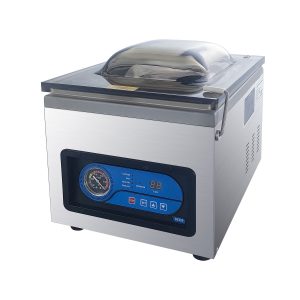
Typical models: DZ-280, DZ-300, DZ-310
Reference price: US$300-350
Benchtop vacuum sealers are compact machines designed for home use, small retail shops, and occasional low-volume packing. They are suitable for dry goods, snacks, small portions, and simple retail packaging.
They usually have a small chamber and a lower pumping speed, so they are not ideal for large vacuum bags or continuous production. If your daily output is low and the package size is small, this tier is usually enough. For factory production, it is better to choose a commercial or industrial chamber model.
2. Small Commercial Single-Chamber Vacuum Machines
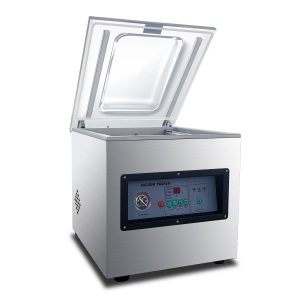
Typical models: DZ-400, DZ-500
Reference price: US$450-600
Small commercial single-chamber machines are suitable for small food shops, convenience stores, and workshops with limited daily output. Compared with benchtop machines, they usually offer a larger chamber, stronger body structure, and better sealing stability.
This category commonly uses a standard 20-type vacuum pump, stainless-steel frame, simple control panel, and basic sealing system. It can handle both dry and moist products, but it is not recommended for long-time non-stop industrial production.
3. Standard Industrial Vacuum Packaging Machines
Typical models: DZ-600, DZ-700, DZ-800
Reference price: US$700-3,000
This is the most common export category for small and medium-sized food factories. Standard industrial chamber machines are suitable for meat, seafood, braised food, cooked meals, grains, dry goods, and hardware accessories.
Compared with light commercial models, the main differences are a larger chamber, stronger stainless-steel construction, better sealing performance, and optional stronger vacuum pump configurations. Some models can use a dual-pump setup to improve vacuum speed and efficiency.
For many overseas buyers, this tier is the best balance between price, performance, and reliability.
4. Heavy-Duty Industrial Vacuum Packaging Machines
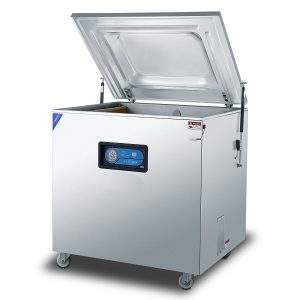
Typical models: DZQ-800, DZQ-900, DZQ-1000
Reference price: US$3,000-10,000
Heavy-duty industrial vacuum machines are designed for high-output factories, large bags, thicker pouches, wet food, and longer daily working hours. They usually have a reinforced stainless-steel body, stronger chamber structure, and larger vacuum pump options.
For heavy packages such as 2.5-5 kg food bags, rice bricks, large meat products, or hardware parts, a large-pump model can provide faster evacuation, higher vacuum stability, and better sealing consistency than a light-duty machine.
For soup, sauce, oily food, seafood, and thick retort pouches, an M-shape heating wire can be considered. It improves heat distribution along the sealing line and helps reduce weak seals, leakage, and bag bursting.
5. Automatic Belt-Type Continuous Vacuum Packaging Machines
Reference price: US$13,000-20,000+
Automatic belt-type vacuum packaging machines are built for large-scale factories that need continuous feeding, automatic lid closing, vacuum sealing, and automatic discharge. They are suitable for standardized production where daily output can reach thousands or tens of thousands of bags.
These machines can also be connected with hot-water shrinking machines, air-drying machines, labellers, and case packers to form a complete packaging line:
vacuum packing -> hot-water shrinking -> air drying -> labelling -> case packing
For long-term operation, buyers can choose stronger pump configurations, large vacuum pumps, or imported BUSCH pump options for better stability. A multilingual touch-screen control panel can also make it easier to adjust vacuum time, sealing time, cooling time, and product recipes.
Why Do Similar-Looking Machines Have Different Prices?
The outer appearance of a vacuum packaging machine does not fully show its real cost. The biggest price differences usually come from the following factors.
Vacuum Pump Configuration
The vacuum pump is one of the most important cost factors. A small pump, dual-pump setup, large industrial pump, and imported BUSCH pump can produce very different results in pumping speed, vacuum stability, service life, and long-hour performance.
Stainless-Steel Thickness and Body Structure
Low-cost machines may use thinner steel plates and lighter chamber structures. Under frequent use, this can cause deformation, air leakage, unstable sealing pressure, and shorter machine life. Reinforced stainless-steel construction is more expensive but more suitable for industrial use.
Sealing System
Standard flat heating wire is usually enough for dry goods and ordinary bags. For wet food, oily products, soup-containing products, and thick retort pouches, an M-shape heating wire can improve sealing strength and reduce leakage risk.
Control System
Basic machines often use simple keypad controls. Higher-end machines may use a touch-screen control system with parameter memory, fault alarms, self-diagnosis, adjustable vacuum and sealing settings, and better compatibility with different bag materials.
Automation and Production Line Compatibility
Standalone machines are suitable for small and medium output. Automatic belt-type machines cost more because they support continuous feeding, automatic discharge, and integration with shrinking, drying, labelling, and case-packing equipment.
How to Choose the Right Vacuum Packaging Machine
- Choose a benchtop machine if you pack small quantities of dry goods or retail products.
- Choose a small commercial single-chamber machine if you operate a shop or small workshop and need several hundred bags per day.
- Choose a standard industrial chamber machine if you need stable production for meat, seafood, cooked food, grains, dry goods, or hardware accessories.
- Choose a heavy-duty industrial machine if you pack large bags, thick pouches, wet products, oily food, or heavy products.
- Choose an automatic belt-type continuous machine if you need high-volume production and want to connect vacuum packaging with shrinking, drying, labelling, or carton packing.
Export Configuration Options
Common export options include:
- Multi-country voltage customization
- Enlarged chamber size
- Longer sealing length
- Heavy-duty stainless-steel body
- Larger vacuum pump
- BUSCH pump upgrade
- M-shape heating wire
- Multilingual touch-screen control panel
- Production line integration
Typical lead time is 10-25 working days, depending on final configuration and order quantity. Standard warranty is usually one year for the whole machine, excluding consumable parts such as heating wires and teflon cloth.
FAQ About Vacuum Packaging Machine Prices
How much does a vacuum packaging machine cost?
A vacuum packaging machine can cost from about US$300 for a small benchtop model to more than US$20,000 for an automatic belt-type continuous machine. Most small and medium food factories choose machines in the US$700-3,000 range, depending on chamber size and pump configuration.
Why are two similar-looking vacuum packaging machines priced so differently?
The main differences are usually inside the machine, including vacuum pump grade, stainless-steel thickness, chamber reinforcement, sealing wire design, control system, and ability to run continuously. These factors affect vacuum speed, sealing stability, service life, and maintenance cost.
Which vacuum packaging machine is best for a small food factory?
For many small food factories, a standard industrial single-chamber or double-chamber vacuum packaging machine such as DZ-600, DZ-700, or DZ-800 is a practical choice. It provides better capacity and reliability than small commercial models without the higher cost of a fully automatic belt-type machine.
Do wet or oily products need a different sealing system?
Wet, oily, soup-containing, or thick-pouch products often need stronger sealing performance. An M-shape heating wire can improve heat distribution along the sealing line and reduce leakage or weak-seal risk compared with a standard flat heating wire.
What information should I provide before requesting a quotation?
Prepare your product type, bag size, bag thickness, whether the product is dry or wet, required daily output, country voltage, and whether you need production line integration. These details help the supplier recommend a more accurate model and price.
Final Buying Advice
When comparing vacuum packaging machine prices, do not judge only by the machine photo or model name. Two machines with similar appearance can have very different pump performance, steel thickness, sealing stability, and service life.
For buyers with stable daily production, the cheapest machine is often not the lowest-cost choice in the long run. A stronger pump, reinforced body, and suitable sealing system can reduce downtime, leakage, and maintenance problems.
If you are not sure which model fits your product, prepare the following details before requesting a quote: product type, bag size, bag thickness, dry or wet material, required daily output, voltage and country, and whether you need automation or production line connection.