

Against the backdrop of globalized development, vacuum packing machines are being applied in an increasingly wide range of scenarios. Especially in the food industry, products processed by vacuum packing can achieve corrosion and fresh‑keeping, dust prevention and damage resistance, making them more convenient for warehouse storage and long‑distance logistics and transportation. In recent years, the technology of vacuum packing equipment has kept iterating and upgrading to meet diversified market production demands.
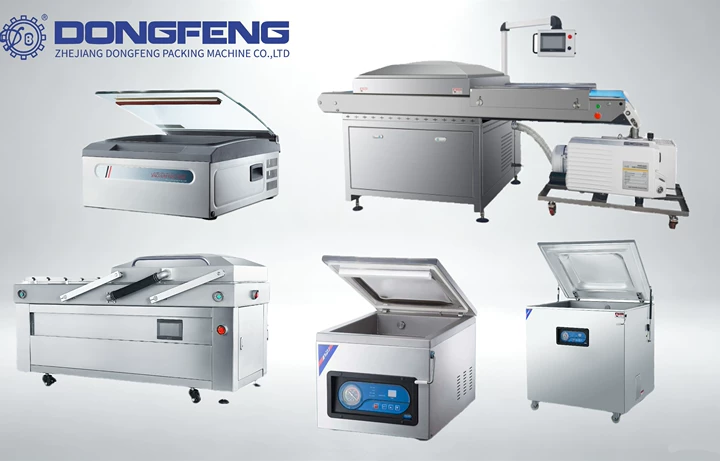
So as a buyer, how should I choose a vacuum packing machine that suits me best? You need to pay attention to the following points:
First, consider your products size.
When purchasing, be sure to confirm the overall dimensions of finished products (including packing bags), and match them with the vacuum chamber specifications and the effective sealing strip length of the equipment.If the vacuum chamber size is too small, goods cannot be placed completely and flatly inside the chamber; if the chamber specification is excessively large, it will not only raise equipment procurement costs but also reduce vacuum‑extracting efficiency. For example: a model with a 600 mm‑long sealing strip is only suitable for packing bags with an opening width less than 600 mm.
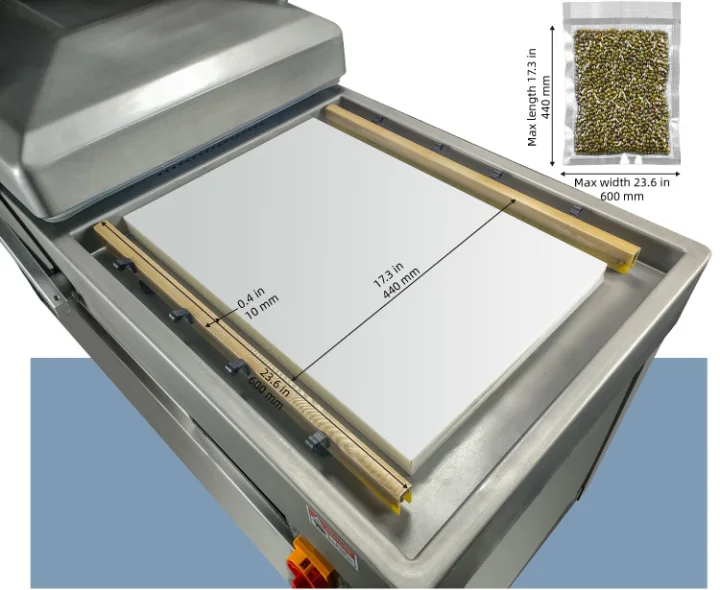
Therefore, let me know the complete dimensions (length × width × height) of your products before purchasing can greatly improve model‑selection efficiency (CONTACT ME).
Tips: For vacuum packing of products of a fixed size, will a vacuum machine with a larger‑size chamber deliver faster vacuum‑extracting speed?
The answer is no! The working principle of a vacuum packing machine is: extract all the air inside the chamber, then seal the bag opening, so as to achieve the vacuum state inside the bag. For products of the same type, the larger the chamber space, the more total air needs to be extracted, and the corresponding air‑extracting time will increase accordingly.
Second, consider what your products are.
Different material characteristics require matching equipment configurations to guarantee packing effects and extend equipment service life:
• High‑salt materials (such as pickled vegetables), or working workshops with high‑humidity environments: It is recommended to select equipment made of SUS304 or even SUS316 stainless steel to resist corrosion from salt and water vapor.
• Liquid materials: The tilting vacuum packing machine is available. Its chamber supports angle adjustment to effectively prevent liquid overflow.
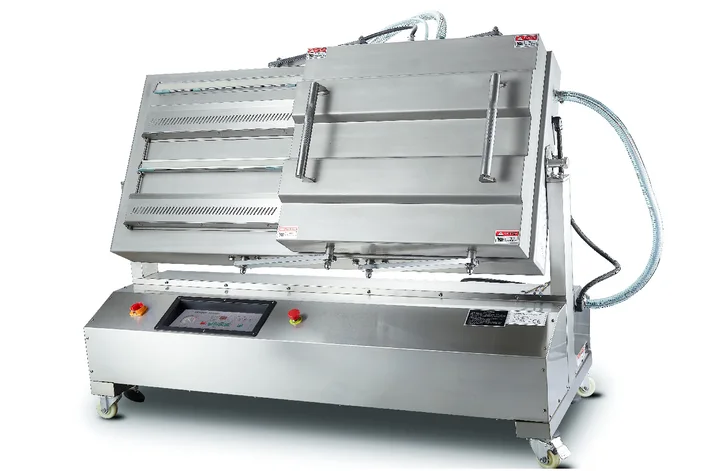
• Products with soup: The M‑type sealing structure is optional to prevent soup overflow during vacuum extraction, which may cause sealing failure.
• Fragile goods such as nuts and tea leaves: Equip with the Gas‑flush function. After vacuum extraction, fill the bag with inert gas such as nitrogen. It can not only prevent materials from being crushed by extrusion for full and rounded packing appearance, but also strengthen anti‑oxidation and fresh‑keeping effects.
• Bone‑in meat and materials with sharp edges and corners: Select models equipped with the Soft Air slow pressure‑release function. Slow pressure release prevents sharp edges and corners from puncturing packing bags and causing air‑leakage problems.
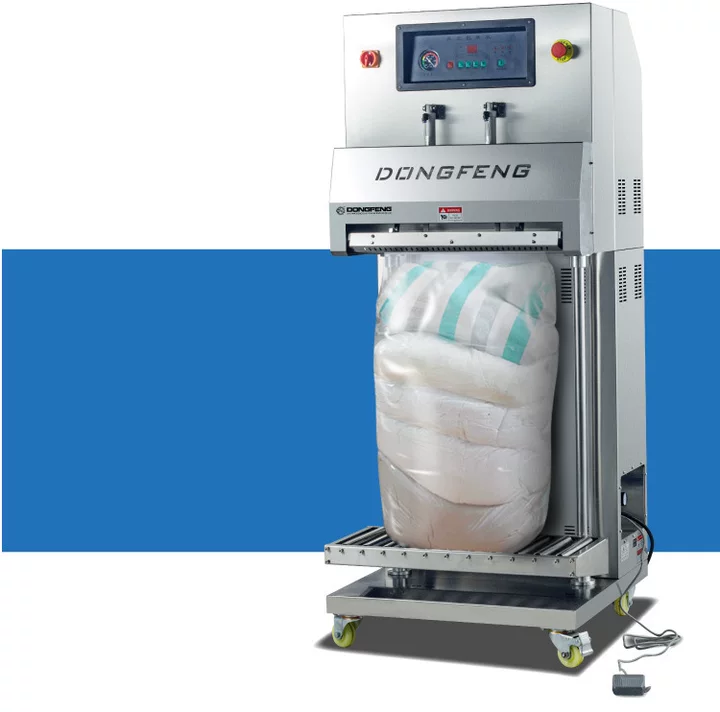
• Large‑size and heavy‑weight products such as quilts and throw pillows that do not require high vacuum degree: Give priority to external‑extraction vacuum packing machines. There is no need to carry heavy goods back and forth for more time‑ and labor‑saving operations.
Vacuum packing machines have a wide variety of optional functions. Inform us of your material characteristics, and you can obtain accurately matched model suggestions.
Third, consider production output.
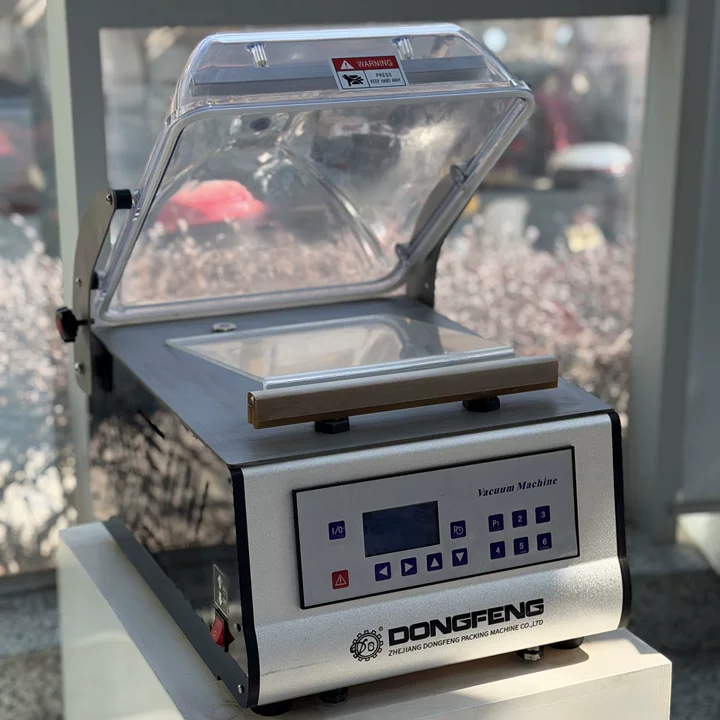
Generally speaking, for household use and small workshops with a daily output of several hundred packs, table‑top or vertical vacuum packing machines are preferred. Such machines feature small footprint, easy movement, simple maintenance and low prices.
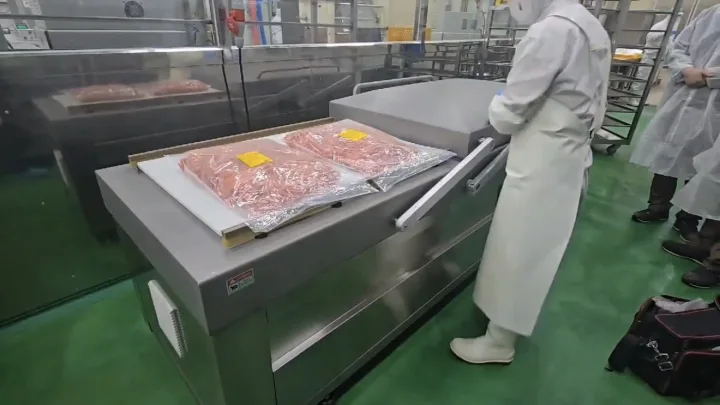
For slightly larger factories and farms with a daily output of over one thousand packs, double‑chamber vacuum packing machines are recommended. Their dual‑chamber alternate operation realizes cyclic continuous production and effectively increases production capacity.
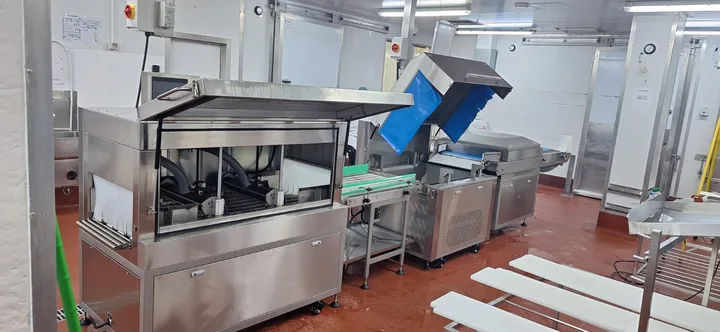
For large‑scale meat‑processing enterprises pursuing highly‑automated production, conveyor‑type vacuum packing machines can be selected. They support non‑stop continuous operation and can be directly connected to complete sets of meat‑processing and packing production lines.
How to increase production output under limited budget or space?
First, multiple packs of products can be placed inside the chamber for simultaneous packing. Compare the chamber sizes of different vacuum packing machine models to find the most suitable one. Second, choose vacuum pumps with higher power. The higher the power, the faster the air‑extracting speed and the higher the overall working efficiency.
There are hundreds of vacuum packing machines on the market with mixed quality. We hope you will screen them carefully and choose high‑quality established brands. Please feel free to CONTACT ME if you have further questions. It is my pleasure to serve you.