

Vacuum Packaging Machines with an External Vacuum Tank and Marinating Function
Traditional marinating can take several hours or even overnight. With thicker cuts, the outside may taste well seasoned while the centre stays mild. If you prepare beef, chicken, seafood or vegetables in batches, a tabletop vacuum packaging machine with an external vacuum tank gives you another way to fit marinating into your prep schedule.
The DONGFENG 410-Ultra is a multifunction tabletop vacuum packaging machine with an external vacuum tank and a marinating function. It can be configured for a range of food preparation and packaging tasks. If you mainly pack smaller pouches and want a more economical setup, the DZ-260H and DZ-310H can also be ordered with an external vacuum tank and vacuum marinating function.
How does an external vacuum tank work for marinating?
Place the ingredients and marinade in the tank, close the lid, connect the tank to the machine and select the marinating programme. The machine draws air out of the sealed tank. In processes that cycle between vacuum and normal pressure, the pressure change can help the liquid move into some foods. The external tank keeps the ingredients and liquid marinade together in a reusable container.
Cut thickness, marinade composition and the vacuum cycle all affect how long a batch needs. If you want more consistent seasoning from one batch to the next, start with evenly sized pieces and record the recipe and cycle settings once you find a result you like. For a fair comparison, cook both batches the same way and check the flavour, tenderness and juiciness.
What do studies show about vacuum marinating at the same temperature?
In a published turkey breast experiment, researchers compared pulsed vacuum brining with conventional brining at atmospheric pressure. Both treatments were run at 11°C. After 72 minutes, the conventional samples had gained 4.75 g of salt per 100 g of starting meat. The pulsed vacuum samples gained 5.85 to 8.07 g, depending on the cycle settings. That is approximately 23% to 70% more salt uptake over the same period in this concentrated brine experiment. Deumier et al., Journal of Food Engineering, 2003, Table 3
In a separate experiment, NC State Extension used red food dye to compare three methods on daikon radish. Over the same treatment time, the measured change in redness (Δa*) was 4.4 with conventional soaking, 5.2 with continuous vacuum and 11.6 with vacuum cycling. The public report does not specify whether the treatments were run at the same temperature. NC State Extension, Effect of Vacuum Cycling on Marination
The turkey study measured salt uptake, and the daikon experiment measured colour change. Both results describe the conditions of the individual studies. Neither study tested the DONGFENG machines featured here. To measure time saved for a particular recipe, compare batches of the same thickness at the same temperature and record how long each method takes to reach the same target, such as a specified salt concentration.
410-Ultra or DZ-260H/310H: Which machine fits your workflow?
| Model | Best fit | Configuration |
|---|---|---|
| 410-Ultra | Teams that switch between several tabletop preparation and packaging tasks. | External vacuum tank and marinating function. Confirm any additional functions when requesting a quote. |
| DZ-260H / DZ-310H | Smaller pouches and lower-volume work on a tighter budget. | External vacuum tank and marinating function are optional. Sealing length is 260 mm for the DZ-260H and 310 mm for the DZ-310H. |
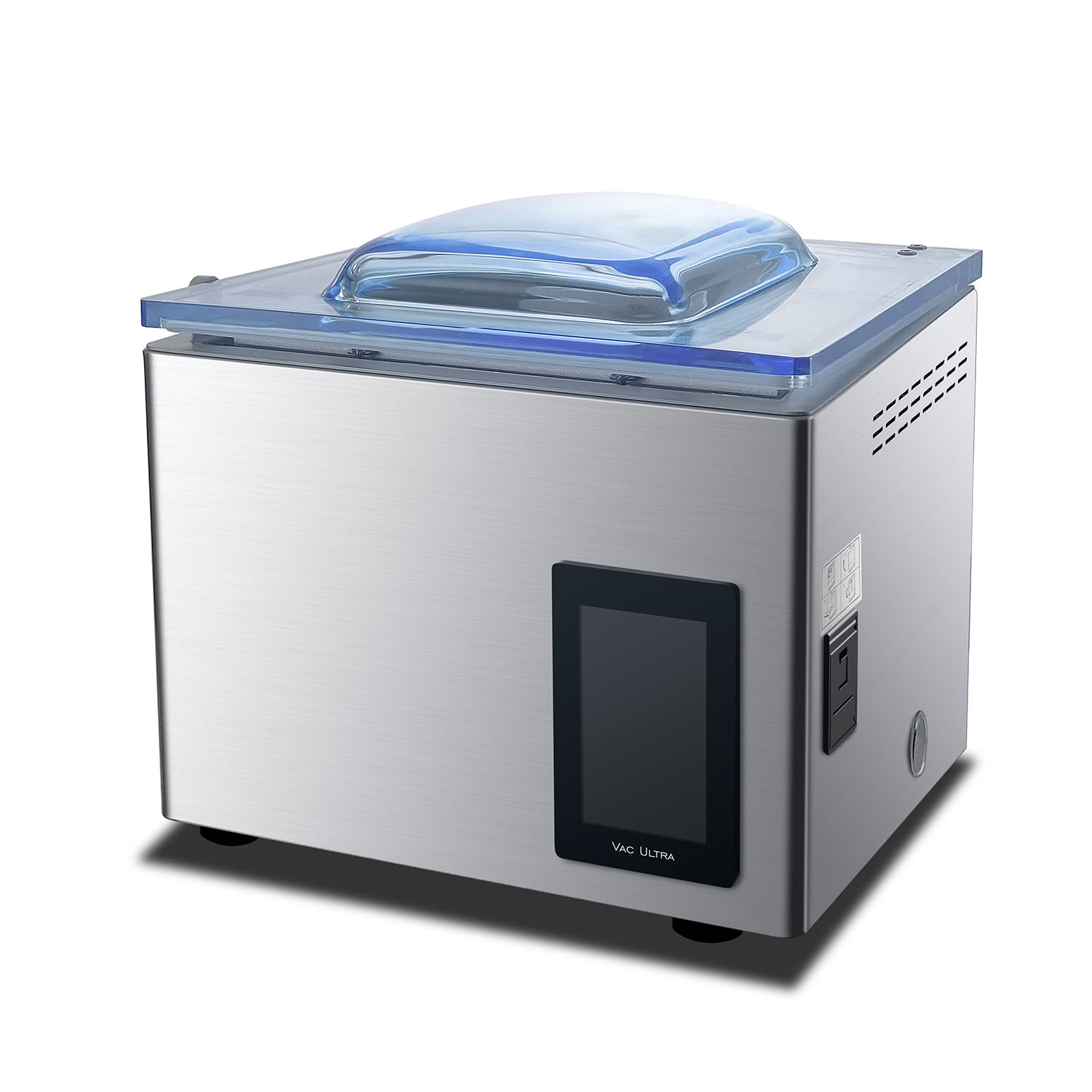
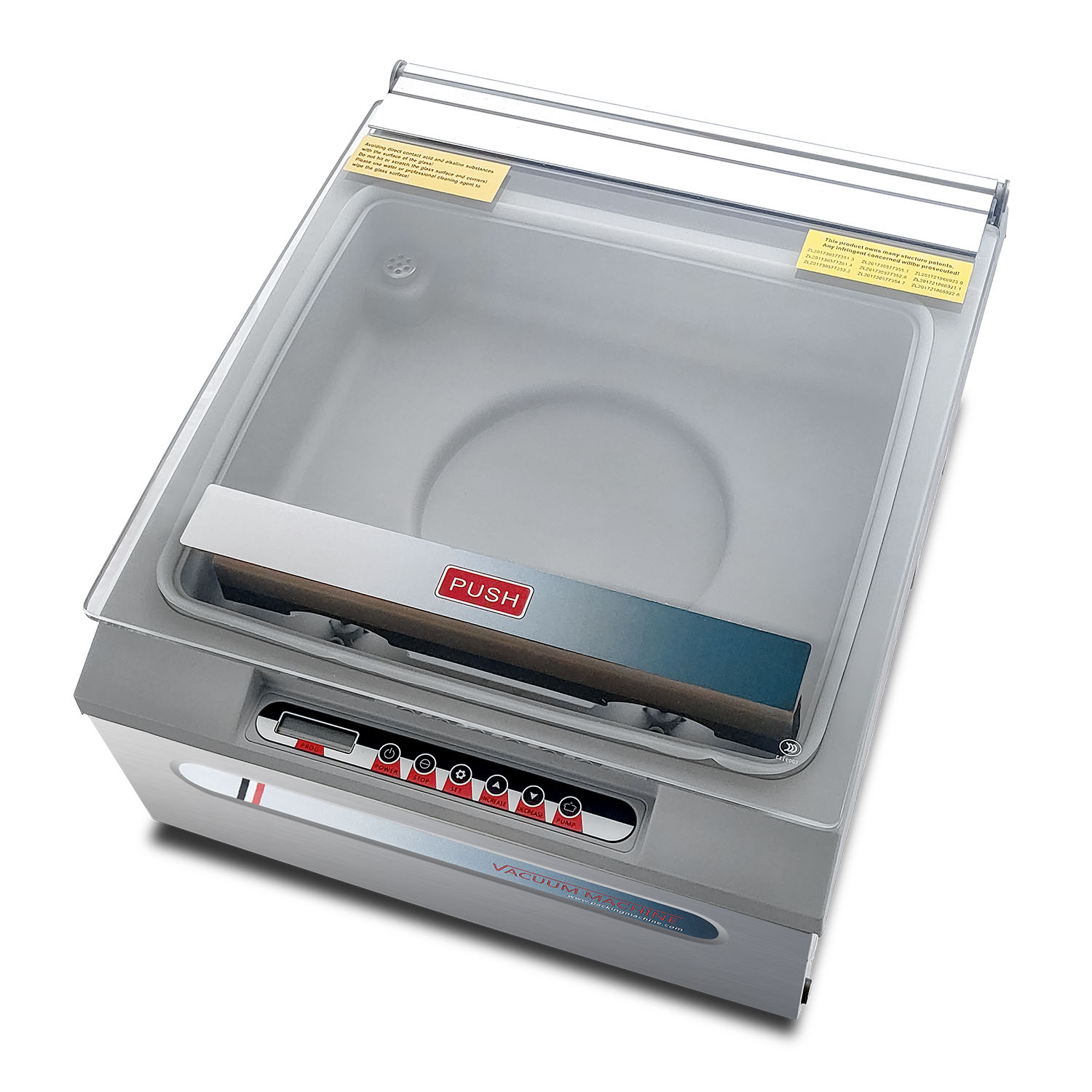
Choose the 410-Ultra if you want to configure one machine for several jobs. If your day-to-day work mostly involves sealing smaller pouches and marinating occasional batches, start with the DZ-260H and DZ-310H specifications. Specify both the tank and the marinating function when requesting a quote.
Can you use the external vacuum tank to store prepared food?
The 410-Ultra’s external tank can also be used to store suitable prepared foods under vacuum. After vacuuming, use the date reminder to mark when you put the food in the tank. That makes it easier to see which batch went into the fridge first.
Use the date marker to track storage, and follow the applicable refrigeration and use-by instructions for the food. Keep perishable foods refrigerated as required, including while marinating. The 11°C used in the turkey study was a laboratory condition. See USDA guidance on vacuum-packed meat and poultry and USDA guidance on marinating poultry.
Get a quote for your tabletop vacuum packaging machine
Tell us what you plan to marinate, how much you prepare per batch and the width of the largest pouch you need to seal. We can help you choose between the 410-Ultra, DZ-260H and DZ-310H and confirm which options to include in your quote.