✅ Suitable Product Categories
Food Items
- Dry goods (most ideal for vacuum packing)
Cereals, rice, beans, nuts, tea, dried mushrooms, dried bean curd sticks, vermicelli and biscuits.
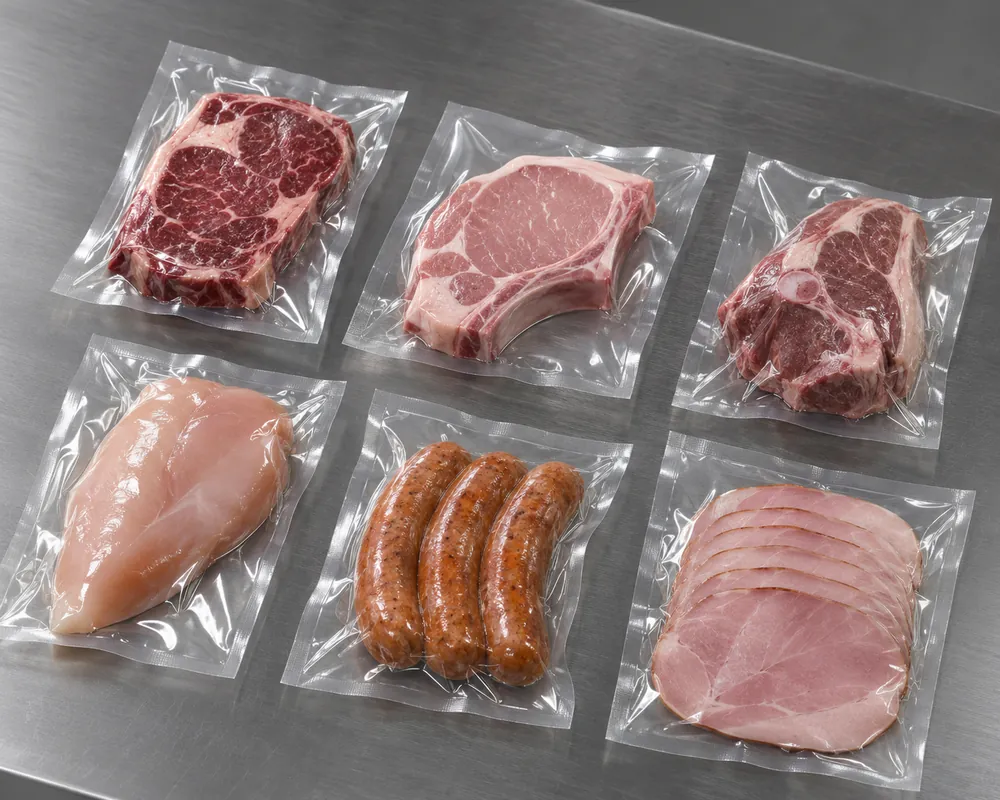
Function: Block oxygen, resist moisture and pests, slow down oxidation and extend shelf‑life. - Chilled raw meat (cold-chain storage required)
Beef, pork, mutton, poultry, fish and seafood.
/ Note: Vacuum sealing does NOT sterilize
food. Products still need refrigeration or freezing. It only suppresses aerobic bacteria and cannot realize room-temperature preservation. - Cooked marinated food
-High-temperature sterilized cooked food:
Braised beef, sauced duck, pig trotters, which can be stored at room temperature after vacuum packing.
-Non-sterilized ordinary cooked food: Must be
refrigerated after vacuum sealing. Vacuum only slows down spoilage instead of enabling room-temperature storage. - Moist & sauced products
Pickled vegetables, kimchi, brined items and sauced cooked food with soup.
Tip: For wet or sauced materials, the
optional M-shape heating wire is recommended to reduce incomplete-seal and leakage issues. - Frozen food
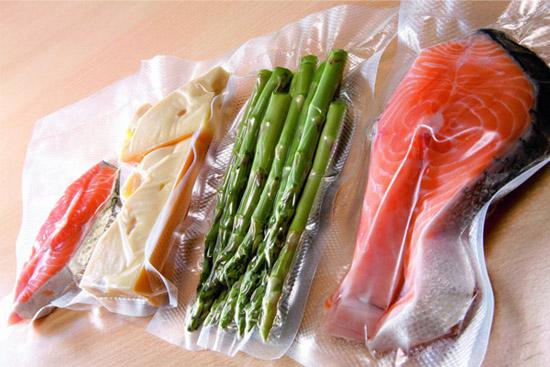
Frozen meat, frozen seafood and quick-frozen balls. Vacuum packing helps avoid freezer-burn.
Non-Food Industrial Items
Screws, fasteners, bearings, electronic components, sponge and textiles.
Function: Anti-rust, dust-proof, moisture-proof and volume-reduction.
X Items NOT Recommended for Ordinary Vacuum Machines - Fresh fluffy fruits & vegetables (lettuce, strawberry, apple
Fresh produce keeps respiring and generating gas. They get crushed easily under vacuum and go bad quickly. Modified atmosphere packaging is suggested instead. - Gas-releasing fermented food (fresh bread, steamed buns)
Continuous gas generation will make pouches inflate later. - Sharp-edged hard * 1s (bones, spiky metalparts)
Sharp corners may puncture vacuum bags.
Protective padding is advised before packing. - Large-volume pure liquid (liquid without solid contents)
Liquid may boil and splash out inside standard vacuum chambers. Special liquid-type vacuum equipment is required. - Hot food
Do not vacuum-seal hot food directly. Hot steam will flow into the vacuum pump and cause permanent damage. Always cool food down completely prior to packing.
Short-version for customer communication (copy-paste for WhatsApp /email)
Products suitable for vacuum packaging V Dry goods: rice, beans, nuts, tea, dried mushrooms, grains
Meat & seafood: fresh/chilled/frozen beef, pork, chicken, fish, shrimp
Cooked food: braised snacks, marinated products, pickles and sauced-wet food Non-food: hardw: arts, bearings,
electronic components
! Not recommended: fresh leafy
fruits-vegetables, highly-aerated bakery goods, sharp-edged items (risk of puncturing bags), large-volume pure-liquid without solids.
! Do not vacuum-seal hot food directly. Hot steam may enter and damage the vacuum pump. Always cool food completely before packing.
Note: Vacuum-sealing does not sterilize food.
For non-sterilized food items, cold or frozen storage is still required. For wet / sauced products, M-shape heating wire is recommended for better sealing performance.